Your Complete Guide to Shotgun Ammo Types, Gauges, and Shell Selection
Shotgun ammo is a cluster of pellets, not a single bullet, which means one trigger pull can send dozens of projectiles downrange at once. Each shell packs a primer, powder, wad, and shot that work together in milliseconds to create a devastating, wide-spreading pattern. That spread is what Ammunition for Sale makes it incredibly forgiving for quick target acquisition, perfect for wing shooting or home defense where you need to hit fast without perfect aim. Just match the shot size to your game—bigger pellets for deer, smaller ones for birds—and you’re set to drop targets with authority.
What Actually Makes Shotgun Shells Different From Other Ammunition?
What actually makes shotgun shells different from other ammunition is their multi-projectile, single-casing design, where the payload—shot pellets, slug, or specialty load—is contained in a plastic hull with a crimp, not a metallic cartridge neck. Unlike rifle or pistol rounds that feed as one solid bullet in a brass case, a shotgun shell fires a spread of lead, steel, or tungsten through a smoothbore barrel, relying on shot cup and wad to protect the bore and shape the pattern. The shell’s length (2¾, 3, 3½ inch) and gauge (12, 20, .410) determine chamber fit, but the real difference is that you choose loads by shot size and velocity for target, bird, or deer, not by pressure curve alone.
You’re not aiming a single point—you’re steering a cloud of projectiles, so your choke and shell length matter more than bullet drop.
That’s why recoil, pattern density, and pellet energy vary wildly within the same box, something no metallic cartridge can replicate.
The Anatomy of a Shell: Hull, Primer, Powder, and Wad Explained
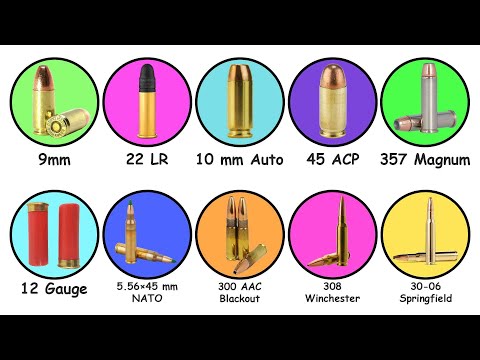
A shotgun shell’s anatomy is a four-part system, each component serving a distinct ballistic function. The hull is the plastic or brass base that holds everything together, shaped to extract cleanly. The primer, seated in the hull’s base, is a shock-sensitive compound that ignites on striker impact. The powder—a fast-burning propellant—creates high-pressure gas, and the wad transfers that gas energy to the shot column, sealing the bore and cushioning pellets from deformation. *The wad’s design—cup, cushion, or gas seal—determines pattern density more than powder charge.*
- Hull length dictates chamber fit, not payload power.
- Primer type (209 or 615) must match powder burn rate.
- Wad petals release shot at muzzle, altering spread.
Why Gauge Numbers Are Counterintuitive (12 vs. 20 vs. .410)
The confusion stems from gauge being a measure of bore diameter derived from lead balls, not a direct caliber. A 12-gauge means twelve lead spheres of that diameter equal one pound, making it larger than a 20-gauge, where twenty spheres fit the pound. Consequently, the lower gauge Shotgun Ammo for Sale number actually indicates a wider, more powerful shell. The .410, however, breaks the pattern entirely—it is a true caliber measurement in inches, not a gauge, and is far smaller than either. This means a .410 is not “forty-one gauge,” but a distinct system that often performs like a very light 28-gauge. So, when comparing 12 to 20 to .410, remember the number’s origin dictates size: smaller gauge number equals bigger payload, while the .410 sits outside that logic entirely.
Shotshell Lengths: 2 ¾, 3, and 3 ½ Inch Chambers
When you’re picking shotshells, the chamber length printed on your barrel—like 2 ¾, 3, or 3 ½ inches—is the maximum shell you can safely fire. A 2 ¾-inch chamber handles standard field loads, while 3-inch chambers give you extra room for heavier magnum shot, and 3 ½-inch chambers are the big-game waterfowl and turkey slayers. You can always shoot a shorter shell in a longer chamber, but never force a longer shell into a shorter chamber. Matching the shell length to your chamber is the non-negotiable rule, so check the barrel stamp before buying. 6.5 Creedmoor Ammo for Sale Here’s the practical order of operations:
- Read your barrel’s chamber marking.
- Buy shells that are the same length or shorter.
- Test that the shell drops in and the action closes freely.

Buckshot vs. Birdshot vs. Slugs: Which Payload Fits Your Task?
Choosing between buckshot, birdshot, and slugs hinges entirely on your target and range. Birdshot, with its small pellets, is ideal for fast-moving birds and clay targets at close to moderate distances, but it lacks penetration for larger game or defense. Buckshot fires larger pellets, delivering multiple wound channels and formidable stopping power at short ranges, making it a top choice for home defense and deer hunting in thick cover. Slugs are single, heavy projectiles that offer deep penetration and flat trajectories, excelling for large game at longer ranges where shot patterns would spread too thin. For a 20-yard indoor defense scenario, which payload retains the most energy through drywall while minimizing over-penetration risk? Generally, a standard 12-gauge 00 buckshot load is preferred over slugs for this role, as its multiple pellets disperse energy across a wider area, reducing the chance of a single round passing clean through multiple walls.
Birdshot Sizes (#8, #9) for Small Game and Clay Targets
For small game and clay targets, **#8 and #9 birdshot sizes** deliver dense patterns that break brittle targets and dispatch fast-moving birds cleanly. The finer #9 shot excels at close-range quail and skeet, where its 580-plus pellets per ounce create a wall of lead that shreds clay fragments. Conversely, #8 offers slightly heavier pellets, retaining enough energy for 30-yard pheasant flushes or trap targets without over-penetrating. *The trade-off is binary: choose #9 for speed and density, #8 for a touch more knockdown power at extended range.* Both sizes minimize pelt damage on rabbits and grouse, making them ideal for table fare.
Q: What is the key difference between #8 and #9 birdshot for clay shooting? A: #9 breaks targets closer to the muzzle with a denser cloud, while #8 sustains pattern integrity further downrange, making it more forgiving on longer station hold points. For mixed small-game hunts, #8 is the pragmatic all-rounder, but #9 lets you shoot faster on close, curling targets without shredding meat.
Buckshot Sizes (00, 000, #4) for Self-Defense and Large Game
For self-defense, 00 buckshot remains the benchmark because its nine .33-inch pellets deliver deep penetration on human threats while still patterning tightly at close range. Step up to 000 buckshot if you need heavier, .36-inch pellets for barrier penetration or larger-bodied predators like bear, though recoil and overpenetration risks rise sharply. Drop to #4 buckshot (twenty-seven .24-inch pellets) when you prioritize reduced collateral risk indoors, yet it still reliably drops whitetail deer at modest distances. For large game beyond fifty yards, however, both 00 and 000 lose energy quickly—making them a poor substitute for slugs. Choose 00 for general defense, 000 for maximum stopping power, and #4 for home defense with less wall penetration.
00 balances defense and game use, 000 maximizes knockdown for heavy threats, and #4 minimizes overpenetration—match buckshot size to your risk scenario.
Rifled Slugs and Sabot Slugs for Deer Hunting at Distance
For deer hunting at distance, rifled slugs and sabot slugs demand a deliberate choice, as they perform through opposite barrel systems. A rifled slug, designed for smoothbore barrels, delivers adequate accuracy to roughly 75 yards, but its spin is limited, causing trajectory drop and drift in wind. To push ethical kills past 100 yards, switch to a sabot slug fired from a rifled slug barrel. The plastic sabot engages the rifling, spinning the smaller-diameter projectile for a flatter, tighter trajectory, extending your effective range to 150 yards or more. Pair sabots with a cantilever-scope setup, and you convert a shotgun into a practical 200-yard deer rifle. For maximum downrange energy and precision, choose sabots; for brushy, short-range shots, stick with rifled slugs.
Q: Which sabot slug is best for 150-yard deer shots?
A: Choose a heavy, bonded-core sabot like a 1-ounce, 12-gauge load from Hornady or Federal; they Handgun Ammo for Sale retain velocity and expand reliably at those extended distances.
How Shot Size, Velocity, and Payload Weight Affect Recoil and Pattern

Shot size, velocity, and payload weight form the core equation of shotgun ammo performance. Heavier payloads—more ounces of shot—directly increase felt recoil, while lighter loads keep the buttstock planted firmly against your shoulder. Velocity amplifies this: faster loads generate sharper, snappier kick, but they also tighten the effective pattern by reducing the time shot string has to spread before reaching the target. Smaller shot sizes, like #7.5 or #8, deliver dense patterns ideal for close-range birds, but they shed energy quickly. Conversely, larger shot (BB, #4) punches deeper and holds a tighter core pattern at longer ranges, yet each pellet’s weight increases recoil slightly. For practical use, balance payload and velocity—a 1-1/8 oz load at 1,200 fps offers a manageable kick with solid pattern density, while 1-1/4 oz at 1,300 fps thumps hard but flattens long-range targets. Always test your shotgun’s choke to match your chosen shot size and velocity for the tightest, most consistent pattern.
Understanding Feet per Second (FPS) and What It Means for Your Shoulder
Understanding **feet per second (FPS) and what it means for your shoulder** starts with recoil impulse—the sharpness of the kick, not just its total force. A 1,200 FPS load delivers a quick, snappy punch, while dropping to 1,000 FPS stretches that same energy over a longer push, which many shooters find more manageable during clay or slug sessions. However, the difference becomes critical when you’re firing 50 rounds in an afternoon, as cumulative strain can turn a mild load into genuine soreness. Slower FPS also reduces muzzle rise, helping you stay on target for follow-up shots. For trap or skeet, sacrificing 150 FPS for comfort often improves consistency.
Lower FPS means a softer, more controllable push; higher FPS trades shoulder comfort for flatter trajectory and harder hits.
Choke Tubes and How They Shape Your Pattern at 20, 30, and 40 Yards
Your choke tube is the final architect of your shot string, dictating pattern density at 20, 30, and 40 yards more dramatically than any velocity or payload change. At 20 yards, a cylinder bore throws a wide, forgiving cloud—ideal for close flushes—while a modified choke tightens that same payload into a turkey-killing core. Push to 30 yards, and improved cylinder begins to open up with visible holes, whereas full choke still holds a devastating, dense circle. At 40 yards, only a full or extra-full choke keeps the pattern lethal; lighter constrictions turn your scattergun into a frustrating wounder. Choose your tube based on your actual engagement distance, not guesswork.
| Distance | Open Choke (Cyl/IC) | Modified | Full/Extra-Full |
|---|---|---|---|
| 20 yards | Wide, even, forgiving | Medium, dense center | Tight, effective, small margin for error |
| 30 yards | Patchy, starting to fail | Consistent, reliable kill zone | Very tight, excellent density |
| 40 yards | Unreliable, sparse | Marginal, needs perfect aim | Still lethal, extended reach |

Heavy Payloads (1 ⅛ oz vs. 1 ¼ oz) and Their Trade-Offs
Choosing between 1 ⅛ oz and 1 ¼ oz heavy payloads directly shifts your recoil and pattern density. The 1 ¼ oz load pushes more shot, increasing felt recoil and requiring a sturdier mount to maintain a smooth swing; in return, it delivers a denser pattern at longer ranges, beneficial for tall birds or tight chokes. Conversely, the 1 ⅛ oz load reduces recoil, allowing quicker follow-up shots and less fatigue during long sessions, but its pattern thins faster beyond 35 yards. The trade-off is simple: the heavier load buys range and edge density at the cost of shooter comfort and gun handling speed.
- 1 ¼ oz increases perceived recoil by roughly 10-15% over 1 ⅛ oz at identical velocity.
- 1 ⅛ oz preserves stock fit and cheek weld better under rapid firing.
- 1 ¼ oz maintains lethal pattern density in modified chokes past 40 yards.
- 1 ⅛ oz allows using lighter shot charges for skeet and early-season upland.
Choosing the Right Shell for Home Defense: Overpenetration and Stopping Power
Selecting shotgun ammo for home defense demands balancing stopping power against overpenetration. Standard 00 buckshot delivers formidable stopping power but poses a severe risk of penetrating drywall and exterior walls, endangering family and neighbors. #4 buckshot offers a practical compromise: its 7mm WSM Ammo for Sale smaller pellets retain sufficient energy for immediate threat neutralization while significantly reducing penetration depth compared to 00. Birdshot is inadvisable for defense; its inadequate stopping power may fail to incapacitate an aggressor. Frangible slugs are another option, designed to break apart upon hitting hard surfaces, but they can underpenetrate heavy clothing. For most homes, a reduced-recoil, low-velocity 00 load or premium #4 buckshot is optimal, as shot placement remains far more critical than raw pellet size for a decisive stop. Always pattern your chosen shell to verify cyclicity and impact point.
Why #4 Buck Might Be Smarter Than 00 Buck Indoors
Inside a home, #4 buck’s reduced penetration depth makes it a smarter choice than 00 buck because it delivers adequate tissue damage while drastically lowering the risk of exiting through walls into occupied rooms. At typical indoor distances of 3–10 yards, #4 buck (typically .24″ pellets) still carries enough energy to penetrate 12–14 inches of ballistic gel—enough to reach vital organs—while 00 buck ( .33″ pellets) routinely penetrates 16–20+ inches, often exiting exterior walls. The smaller pellets also fragment less predictably through drywall, but their increased count (27 vs. 9) creates a denser pattern, meaning you’re more likely to land multiple hits on a narrow threat without the overpenetration liability. For a tight hallway or bedroom, that trade-off is tactically superior.
Q: Is #4 buck really more effective than 00 buck for stopping an intruder indoors?
A: Yes, in most practical scenarios—because at close range, #4 buck’s 27 pellets create a wider, more forgiving shot pattern, and its reduced penetration 7mm-08 Ammo for Sale still meets the FBI’s 12-inch minimum, while lowering the chance of harming someone behind the target. 00 buck’s extra power is wasted indoors and becomes a hazard.
Low-Recoil and Reduced-Recoil Loads for Faster Follow-Up Shots
Low-recoil and reduced-recoil loads are a tactical necessity for home defense, not a concession to sensitivity. By lowering felt kick, these rounds allow you to keep the shotgun’s muzzle on target and cycle the pump action without yanking the barrel off-line. You’ll shave critical fractions of a second off your follow-up shot, turning a sluggish, punishing gun into a rapid, controlled platform. Reduced recoil also curbs the instinctive flinch that ruins accuracy under stress, so your second and third rounds land exactly where the first did. In a hallway fight, that speed and precision beat raw power every time.
Short Shells (1 ¾ Inch) for Magazine Capacity and Control
Short shells, measuring 1 ¾ inches, directly maximize your shotgun’s magazine capacity, often allowing you to carry two additional rounds in a standard tube compared to 2 ¾-inch loads. This increased round count is their primary tactical advantage for home defense, reducing the urgency to reload under stress. However, their shorter length frequently demands a dedicated carrier or adapter, as standard shell stops may not reliably feed them, causing a jam precisely when control matters most. This slight reduction specialty sports in recoil also aids faster follow-up shots, but you must verify your specific shotgun cycles these minis flawlessly.
- Expect capacity to increase by 2–3 rounds in a typical 5-round magazine tube.
- Reliability hinges on using a purpose-built mag follower or adapter for consistent feeding.
- Reduced recoil impulse improves shot-to-shot control and 6.5 PRC Ammo for Sale muzzle discipline in tight spaces.
- Pattern spread is often tighter at close range, but verify performance Rifle Ammo for Sale at 10 yards or less.
Common Pitfalls and Practical Tips for Storing and Buying Shells
Don’t just grab any box off the shelf—shells have quirks. Check the crimp before buying, especially on budget packs; a cracked or loose star crimp means powder can leak and velocity drops. For storage, keep ammo out of hot car trunks and direct sun, as heat degrades the hull plastic and can soften primers over seasons. Avoid storing loose shells rattling in a bucket—use the original boxes or a dedicated ammo can with desiccant, since humidity corrodes brass bases and makes extraction sticky. Buy only what you’ll shoot within a year or two, because shelf-aged shells, especially low-brass target loads, can develop weak ignition. Also, never mix different shot weights in the same magazine tube during a hunt; it changes point of impact without warning. That “great deal” on unknown reloads is rarely worth the jam risk in your action.
How Long Does Ammo Last? Shelf Life and Storage Conditions
Unopened shotgun ammo, stored properly, can last decades—often 30 to 50 years—but shelf life depends entirely on storage conditions. Heat, humidity, and rapid temperature swings degrade propellants and primers faster than time alone. Keep shells below 75°F and under 50% relative humidity; avoid attics, Rimfire Ammo for Sale garages, or car trunks where summer heat spikes accelerate powder breakdown and cause corrosion on the brass or plastic hull. For long-term storage, follow this sequence:
- Seal shells in airtight, ammo-specific containers with desiccant packs.
- Store them off concrete floors to prevent moisture wicking.
- Rotate stock annually—fire the oldest rounds first to verify reliability.
If primers show green corrosion or hulls feel brittle or swollen, discard them; such rounds risk misfires or pressure inconsistencies.
Buying in Bulk vs. Boxes: What to Check for Crimp and Wad Defects
When buying in bulk, you forfeit the per-shell inspection afforded by boxes, so crimp and wad defect checks become critical. Bulk flats often hide crushed star crimps or tilted wads beneath loose packaging; inspect the exposed primers and case mouths—a missing or asymmetric crimp indicates powder leakage or pressure inconsistency. In boxes, pull a few shells and feel the wad’s seating: a flush, firm wad is correct, while a recessed or protruding wad signals a setback risk during feeding. For bulk, randomly sample ten shells per case, checking for crimp cracks or wad deformation; reject any lot with more than one defect. Boxed shells also allow you to verify the crimp’s star pattern is uniform—six clean petals, no jagged edges—whereas bulk bags conceal this until you’re at the range. Prioritize visual and tactile checks: a wad that rattles inside the hull, even in boxes, suggests poor crimp tension and unreliable ignition.
Matching Your Shell to Your Shotgun’s Action (Pump, Semi-Auto, Break-Action)
For **pump-action shotguns**, shell length and crimp style are critical, as a rolled crimp or overly long shell can bind in the tubular magazine, causing feed failures. Semi-autos demand a minimum power level to reliably cycle the bolt; light target loads may short-stroke the action, so always test the specific ammo you intend to use. Break-actions are the most forgiving, accepting a wider range of pressures and lengths, but still require properly seated shells in the chamber to avoid hinge issues. For pumps and semis, stick to factory crimps—star or fold—rather than hand-rolled ones. The same shell that feeds flawlessly in one semi-auto can jam another, so verify compatibility before bulk buying. Check your manual’s stated maximum shell length and minimum velocity before purchasing.